
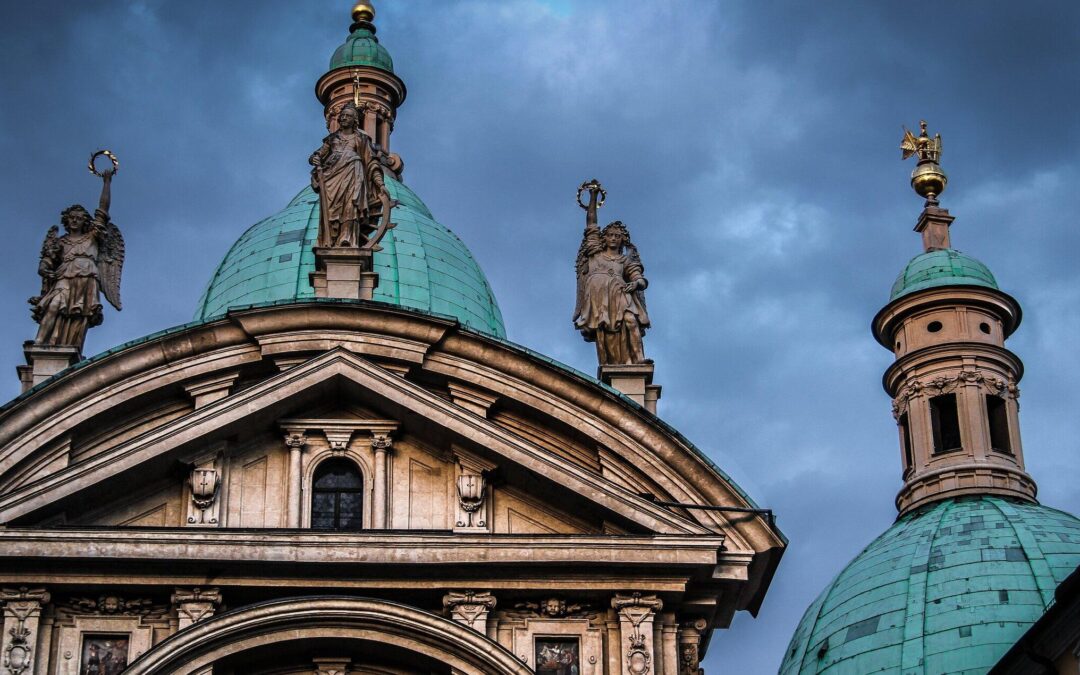
The imperial Mausoleum attached to the former court chapel at Graz, which has since been elevated to the status of a cathedral.
Saturday May 2, 2026 at 7.30 P. M.
The Parish Church of St. Andrew
311 North Raymond Avenue
Pasadena CA 91103
Free parking in the lot diagonally across from St. Andrew’s.
Graz was the capital of Inner Austria, which was governed by a cadet branch of the Habsburg family. When the famously incompetent Emperor Matthias died in 1619, he was succeeded by his cousin, Archduke Ferdinand of Styria, who moved his personal retinue to Vienna upon his election as the next Holy Roman Emperor, Ferdinand II.
Emperor Ferdinand II.’s father, Archduke Charles II. of Styria, had made Graz a center for Italian art & culture in his zealous efforts to implement the Counterreformation north of the Alps. The Graz court was, therefore, the entry point which brought the baroque to Austria, and, from there, throughout rest of Europe.