
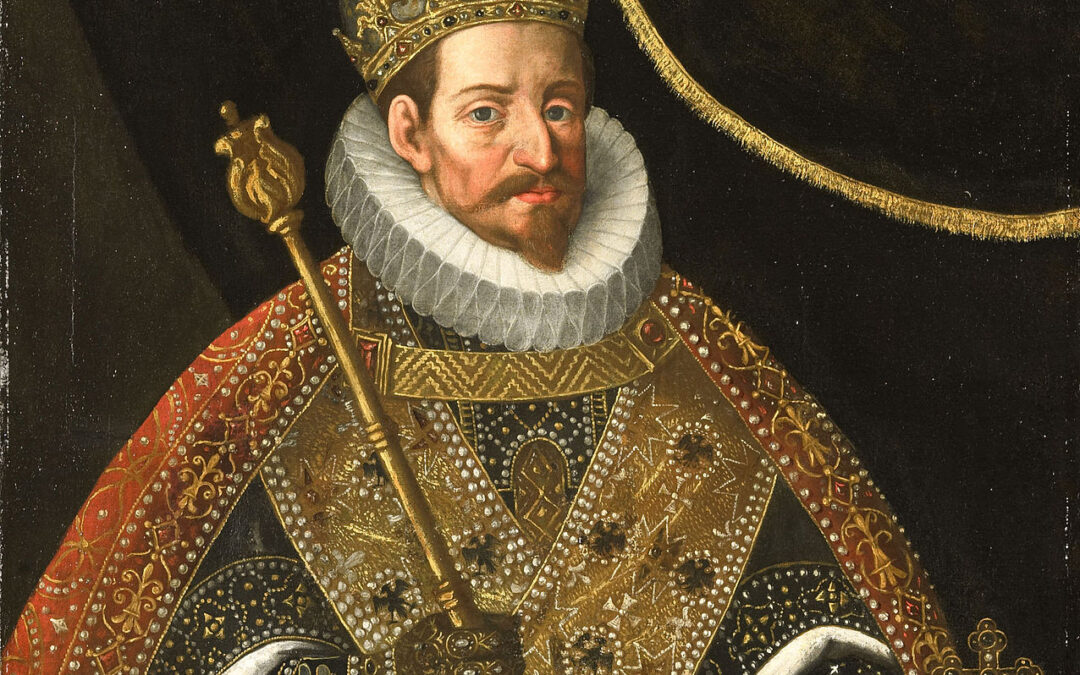
Posthumous portrait of Emperor Matthias painted by Hans von Aachen in 1625, housed in the rijksmuseum of Amsterdam.
Saturday November 14, 2026 at 7.30 P.M.
The Parish Church of St. Andrew
311 North Raymond Avenue
Pasadena CA 91103
Free parking in the lot diagonally across from St. Andrew’s.
Sunday November 15, 2026 at 4 P.M.
Orange County
Venue will be announced soon.
Musica Transalpina is proud to present the first known modern performance of an extraordinary Requiem mass composed by Christoph Straus in October of 1621. Straus was chapel master to the notoriously incompetent Emperor Matthias, who showed a preference for the baroque musical styles emerging in Italy, and Christoph Straus was among the first to compose music for the Habsburg court in the elaborate new concertato style. When Emperor Matthias died in 1619, Straus was replaced by the much more fashionable Italian composers that the new emperor, Ferdinand II., brought with him from his home in Graz, whose court far outshone Vienna in splendor. Straus was retained in a bureaucratic capacity in the Imperial household, so it is most likely––considering the month that this Requiem setting was composed––that it was intended for the All Souls’ Day observances held at the chapel royal on November 2, 1621.
This Requiem mass is extraordinary for specifying distinctions between vocal & instrumental passages within each of the parts, which is remarkable considering the early date of its composition. It is composed in ten independent parts divided across two choirs, with voices alternating with instruments in order to create primitive obbligato passages, effectively doubling the scope of this work to twenty parts. Christoph Straus became chapel master at S. Stephen’s Cathedral in 1626, and died in 1631, the year that this setting was published by Christoph’s son, Matthias Straus.